
For research partners
Research with living Maya medicine, on terms that hold.
You want to work with Indigenous knowledge in a way you can defend to your ethics board, your co-authors and the people whose knowledge it is. IMMI is being built for exactly that kind of research.
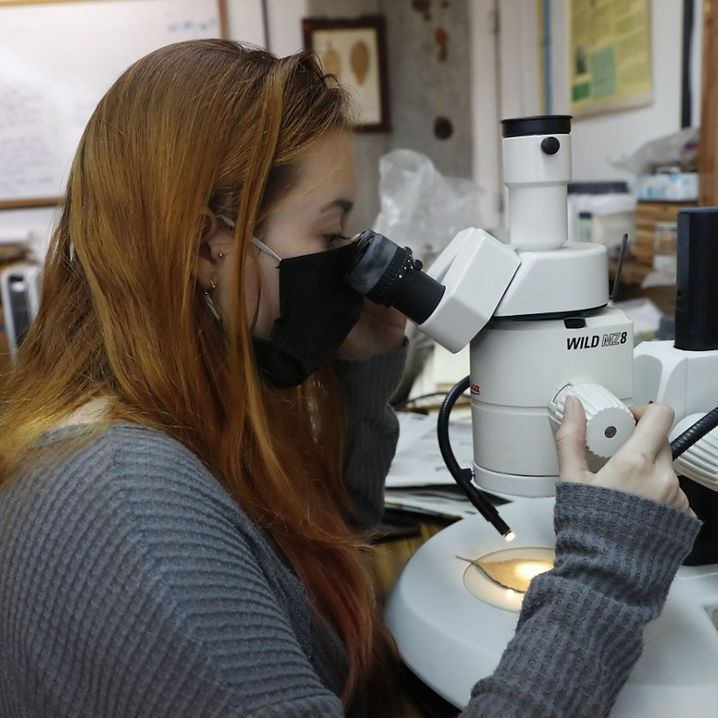
The difficulty you know
Good research with knowledge holders is hard to start, and harder to keep right.
Most researchers who want to work with Indigenous medicine meet the same walls. There is no visible place to begin. Relationships take years, while funding cycles take months. A consent given for one interview is stretched to cover a paper, a database, a product. Plant records arrive without the people who use the plants. And too often the knowledge holders end up as objects of study rather than partners.
You may also know the quieter cost: research that is technically clean and still leaves a community with nothing, or with less trust than before.
What changes with IMMI
Start where the relationships already exist.
01
Relationships, not cold access
Long-standing relationships and research with Maya Traditional Councils and knowledge holders. The Association of Councils of Maya Spiritual Guides Releb'aal Saq'e' (ACGERS) in Petén co-led the Green Health Project (2019 to 2022).
02
A method that is published
The Bidirectional Emic-Etic approach: each knowledge system reflects on itself before the two exchange and examine one another. Developed with five Maya Traditional Councils and ETH Zurich, and published in Qualitative Health Research (2016).
03
Permission before the work, for each use
Recording, research, publication, teaching, digitizing and any commercial use each need their own permission. Data, samples, publication and benefit sharing are agreed in writing before work begins.
04
Knowledge holders as researchers
Planned: knowledge holders serve as researchers, with paid participation. Indigenous and community data does not become Green Health's property because Green Health stores or digitizes it.
We need to understand more of the Maya way.
Research lines
Where your discipline fits
Ethnobotany and plant science
Plant inventories and identification, with provenance and the people who use the plants; propagation and assisted reproduction of priority species; daylight and growing conditions.
Pharmacology and safety
Literature and safety work first; studies of preparations that knowledge holders choose to research; the treatment-outcome studies the 2020 review calls for.
Diabetes, skin and wound care
Diabetes and skin conditions are a focus of our research: a study is designed to document, with biomedical measurements, how people with type 2 diabetes are treated in Maya medical systems.
One Health and community health
Community One Health baselines of human, animal and environmental health risks, built with the communities that use them.
Medical anthropology and method
Co-leadership across knowledge systems, consent as a process, and what makes intercultural health partnerships last.
Architecture, design and learning
Places where Maya medicine, plants and people meet: gardens, a herbarium unit, the Ajilonel School and learning that travels without uprooting.
How a collaboration starts
Six steps, at the pace of trust
-
Step 1
You propose
A few lines on your question, your field and why you want to work with IMMI.
-
Step 2
A first conversation
We reply with a first view and, where it fits, a call with the research team.
-
Step 3
The knowledge holders decide
Decisions about what may be shared, researched, taught or kept within the community rest with the knowledge holders and their Traditional Councils.
-
Step 4
Agreed in writing
Before the work begins, an agreement sets out the research questions, data and samples, authorship and publication, benefit sharing, and how either side can leave. Its frame is the Green Health Codex of Principles and Conduct.
-
Step 5
Work together
Research as encounter and co-creation, with interpretation between languages where needed and the Green Health Codex of Principles and Conduct as the frame.
-
Step 6
Results return
Results go back to the people who made them possible, and are published together where the holders agree.
The research record behind this, with citations, is on the IMMI page.
Questions researchers ask
Before you propose
Can we collect plant samples or take material abroad?
Only with the permission that covers that step. In the Green Health Project, no plant material was exported and no samples were collected for research and development. Any sampling is agreed first, with the knowledge holders and the authorities that grant permits in Guatemala.
Who owns the data and the results?
Indigenous and community data does not become Green Health's property because Green Health stores or digitizes it. Ownership, access and publication are agreed in writing before the work starts.
How long does it take to begin?
We reply to a proposal within five working days. Work with literature and published records can start once the scope is agreed; work with knowledge holders begins when they and their Traditional Councils agree to it, which usually takes several months.
Can the knowledge holders stop a publication?
Decisions about what may be shared, researched, taught or kept within the community rest with the knowledge holders and their Traditional Councils. That is why what may be published, and how openly, is agreed before the work begins, so that a project knows from the start what it can publish.
Propose a research collaboration
A few lines are enough to start.
Tell us your question, your field and why you would like to work with IMMI. We read every proposal with the research team and reply with a first view.