
IMMI · Mesoamerican Institute of Indigenous Medicine · Instituto Mesoamericano de Medicina Indígena
Where Indigenous peoples represent themselves.
IMMI, the Mesoamerican Institute of Indigenous Medicine, is a Green Health initiative: the Maya Knowledge System, held by its Traditional Councils and knowledge holders and shared respectfully. Together with Green Health, the space of innovation, it forms a pluriversity, where the Maya and the Western ways of knowing stand side by side.
IMMI is being established as a scientific institute, to be recognized internationally.
The pluriversity
More than one legitimate way of knowing
A conventional university starts from one universal knowledge system. A pluriversity starts from the premise that there is more than one legitimate way of knowing.
IMMI is not one building, research center or botanical garden. It is a network of Mesoamerican knowledge systems, connecting people, territories, plants, research, teaching and community practice. Here, Maya science and modern science meet as partners, and neither has to subordinate itself to the other.
Who teaches
Ajq'ij (spiritual guides and wisdom keepers), Ajq'omanel (traditional Healers), Ajilonel (plant specialists) and Comadronas (midwives) teach and research in their own right, and are to be paid for their time.
How knowledge is tested
Each knowledge system keeps its own standards of evidence. Where findings are published in the scientific literature, they go through peer review.
Where it is learned
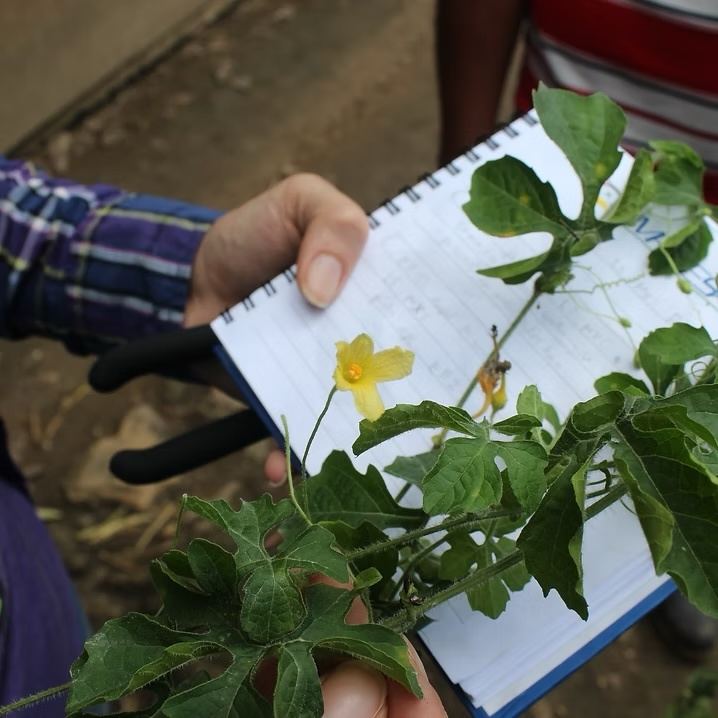
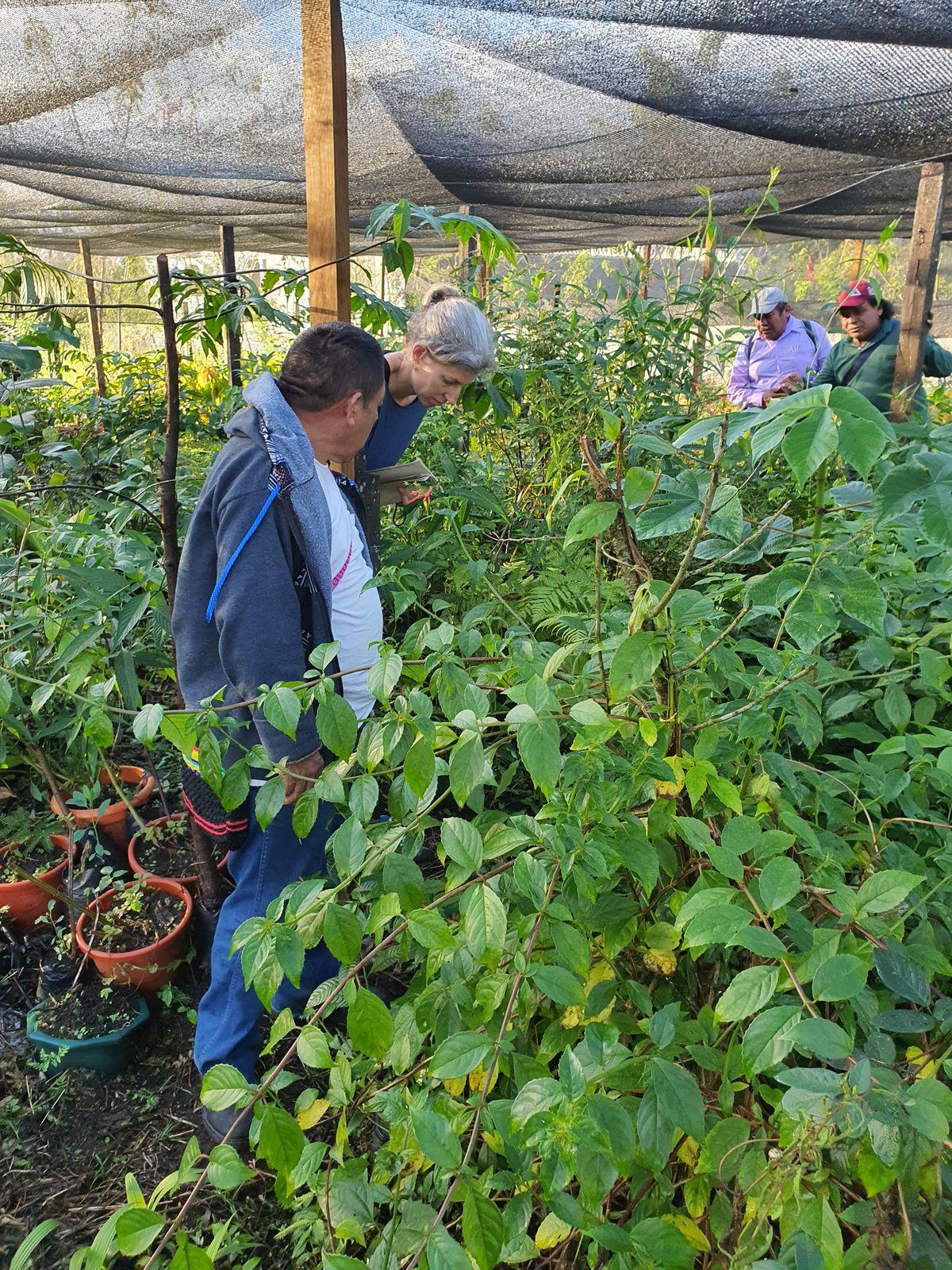
In the places where the knowledge lives: nurseries, gardens, forests and the gatherings of the Traditional Councils. In the highlands of Guatemala, IMMI works with Rujotay K'aslemal, a network of practitioners and knowledge holders.
- Name
- Mesoamerican Institute of Indigenous Medicine (IMMI); in Spanish, Instituto Mesoamericano de Medicina Indígena
- A Green Health initiative
- Green Health is the space of innovation; IMMI is the Maya Knowledge System within it
- First places
- IMMI Muxux (Piedra Parada, Guatemala City) and IMMI Petén
- Bound by
- the Green Health Codex of Principles and Conduct, reviewed and approved by several Maya Traditional Councils and Ajq'ijab'
- Who decides what is shared
- the knowledge holders and their Traditional Councils
Status
What exists, what is being built, what comes later
Exists
- Long-standing relationships and research with Maya Traditional Councils and knowledge holders
- Peer-reviewed publications and the 2016 book
- A tested method for research on equal footing
- A medicinal-plant nursery and sanctuary built with ACGERS in Petén (2020 to 2022)
- The Codex of Principles and Conduct (June 6, 2026)
Being built in 2027
- Knowledge Network gatherings, with paid participation of knowledge holders
- The IMMI Muxux nursery and a first food and nutrition botanical garden section
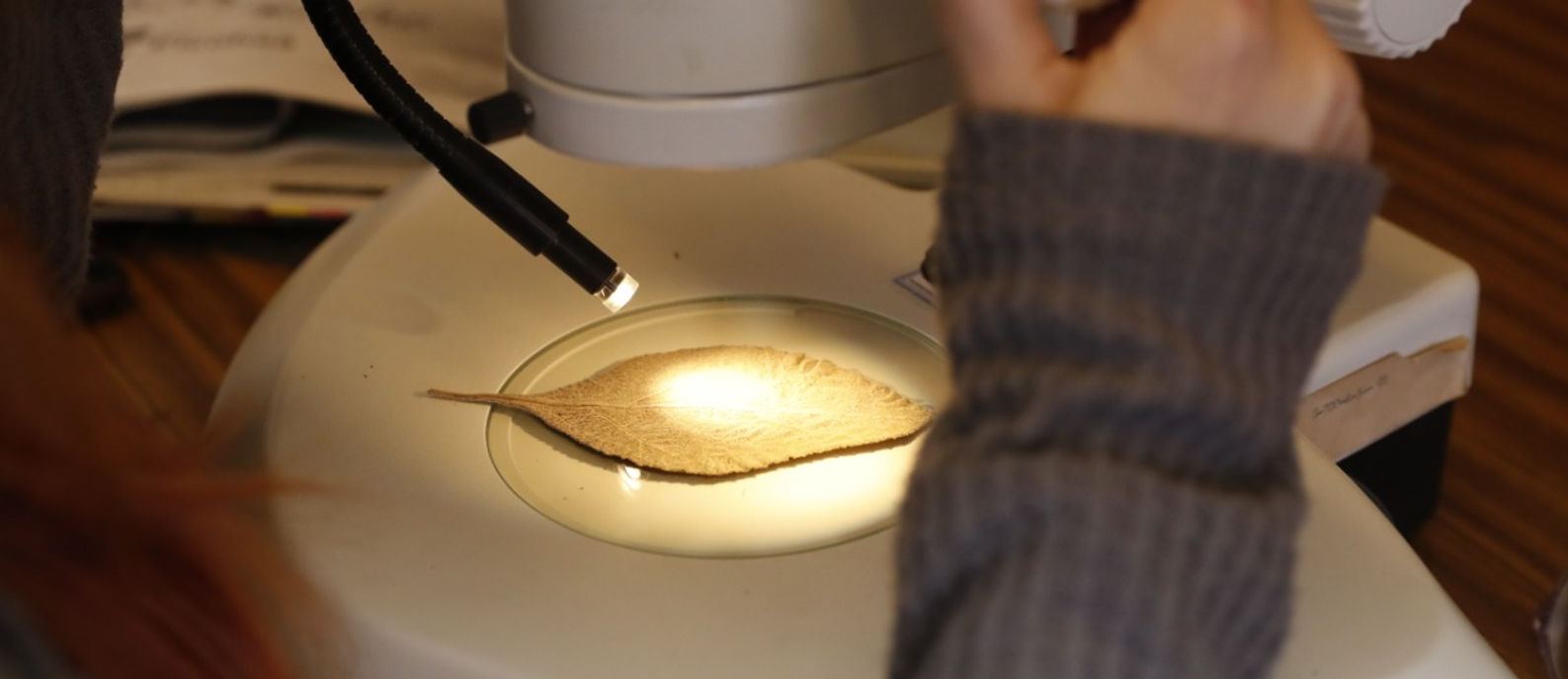
- A herbarium at IMMI Muxux
- A first module of the Ajilonel School in IMMI Petén
- Research, safety and protocol work, and a galenic laboratory
- IMMI established as a scientific institute by the end of 2027
Later
- The first buildings and the IMMI Research Hub
- Kawilal measurement across the places
- Further places, where knowledge holders want them
Why IMMI is different
Four commitments an institution can rely on
01
Equal footing
Research is an encounter and a co-creation between knowledge systems. Planned: knowledge holders serve as researchers, with paid participation.
02
Governed, not extracted
Different uses need different permissions: to encounter, record, research, publish, teach, digitize or commercialize. Permission at one stage is intended never to imply the next.
03
Rooted in places
The knowledge lives in territories, nurseries, gardens and Traditional Councils, not in an archive. IMMI's places are where it is practiced and taught.
04
Apart from commerce
Commercial pathways may help sustain Green Health, but they do not define or control IMMI. Capital does not buy purpose.
How IMMI works
Four pillars that work as one system.
01
Knowledge Network
Traditional Councils and knowledge holders decide what knowledge should be strengthened, shared or kept within the community. Gatherings, transmission, documentation where permitted.
02
Learning Centres
Places where people can see, touch and learn from living knowledge: collections, teaching, practitioner development and research.
03
Q'anil
Plants, seeds, nurseries, propagation and living landscapes. Q'anil means seed: the living beginning from which knowledge, plants and relationships can grow.
04
Impact Programmes
Selected knowledge is prepared, with safety work, intended to become a practical health benefit, subject to evidence review.
How knowledge moves through IMMI
Each step needs its own permission. Nothing moves to the next step by default.
- Knowledge holders meet in the Knowledge Network
- Communities decide what matters and what may be shared
- Plants and seeds are documented, exchanged and propagated
- Authorized knowledge is researched, with safety work first
- Food and simple health knowledge returns to communities
- Learning, and the value it creates, returns to the network
Research
The institution is new. The research it grows from is not.
IMMI builds on long-standing relationships and research with Maya Traditional Councils and knowledge holders, and on peer-reviewed publications with Swiss, British and Guatemalan research institutions.
The method was developed together and published: the Bidirectional Emic-Etic approach, in which each knowledge system first reflects on itself, then the two exchange, then each examines the other and itself, until they work on a shared language. Co-leadership and consent come before the first question is asked.
… in marked contrast to their previous experiences with university researchers, when the Mayan people were regarded as objects for study rather than partners.
-
2011 to 2014
Five Traditional Councils and ETH Zurich
A transdisciplinary research process on cancer-healing systems (MACOCC) ran between Maya medical specialists of five Traditional Councils (Kaqchikel, Q'eqchi', Mam, K'iche', Mopan) and scientists of ETH Zurich, under a formal cooperation agreement signed in 2011. Funded by the Cogito Foundation, ETH Zurich and the Swiss Embassy in Guatemala.
-
2016
A book authored by knowledge holders
Raxnaq'il Nuk'aslemal. Medicina Maya' en Guatemala names 67 knowledge holders as the bearers and authors of the knowledge. It rests on 67 in-depth interviews and ten analysis workshops of the Traditional Councils of Elders, which revised the content. Produced with the financial support of ETH Zurich and the Swiss Embassy in Guatemala.
-
2019 to 2022
The Green Health Project
Funded by the UK Darwin Initiative and led by UCL School of Pharmacy with the Unit of Medical Anthropology of Universidad del Valle de Guatemala, ACGERS, CONAP and Indigena Biodiversity Limited. The Traditional Council gave its permission to co-lead the project in June 2019; the research was reviewed by UVG's institutional review board; no plant material was exported, and no samples were collected for research and development.
-
2020
An honest view of the evidence
A scientific review of 98 species, co-authored by a member of Green Health's team (Geck et al. 2020), finds that data on safety and effectiveness are limited, especially for native herbal drugs, and calls for treatment-outcome studies. That is the work IMMI is designed to do, with research partners.
-
2022 to 2024
A community guide to One Health
With Universidad del Valle de Guatemala and the Swiss Tropical and Public Health Institute, for the GIZ program Una Salud Selva Maya: a One Health baseline of health risks in two communities of Petén, and Kawilal, a community guide that lets other communities build their own.
-
2025
Designing a place for living knowledge
ETH Zurich's Chair of Architecture and Urban Design ran the design studio "Curative Gardens" on a medicinal garden for IMMI in Guatemala City.
-
2026
A Codex, and research in preparation
The Green Health Codex of Principles and Conduct, rooted in Maya wisdom, was reviewed and approved by several Maya Traditional Councils and Ajq'ijab'. A research program on daylight, plants and One Health is in preparation with ETH Zurich and partners.
What comes next in research
- Diabetes and skin conditions are a focus of our research: a study is designed to document, with biomedical measurements, how people with type 2 diabetes are treated in Maya medical systems.
- Research areas planned for IMMI include wound care and diabetes-related research, with literature and safety work first; any health use is intended and subject to evidence review.
Publications
Read the work
Transdisciplinary research on cancer-healing systems between biomedicine and the Maya of Guatemala
Berger-González M, Stauffacher M, Zinsstag J, Edwards P, Krütli P. Qualitative Health Research 26(1):77–91, 2016.
doi 10.1177/1049732315617478Green Health in Guatemala: how can we build mutual trust and partnerships to develop an evidence base for local medicines?
Berger-Gonzalez M, Scotti F, Garcia AI, Hesketh A, Hitziger M, Thompson I, Heinrich M. Botany 100:109–126, 2022.
doi 10.1139/cjb-2021-0070Traditional herbal medicine in Mesoamerica: toward its evidence base for improving universal health coverage
Geck MS, Cristians S, Berger-González M, Casu L, Heinrich M, Leonti M. Frontiers in Pharmacology 11:1160, 2020.
doi 10.3389/fphar.2020.01160Relationships that heal: going beyond the patient-healer dyad in Mayan therapy
Berger-González M, Vides A, Heinrich M, Strauss S, Taquira S, Krütli P. Medical Anthropology 35:353–367, 2016.
doi 10.1080/01459740.2016.1141408Patient-centered boundary mechanisms to foster intercultural partnerships in health care: a case study in Guatemala
Hitziger M, Berger Gonzalez M, Gharzouzi E, et al. Journal of Ethnobiology and Ethnomedicine 13:44, 2017.
doi 10.1186/s13002-017-0170-yRaxnaq'il Nuk'aslemal. Medicina Maya' en Guatemala
The knowledge holders of five Traditional Councils, as authors. First edition 2016, © Asociación Ati't Ala', ISBN 978-9929-636-21-7.
Who IMMI has worked with
Institutions and Traditional Councils, by what was done together
ETH Zurich
Research with five Traditional Councils (2011 to 2014) and the 2016 book. Design research for IMMI's first place (2025).
Universidad del Valle de Guatemala
Its Unit of Medical Anthropology hosted the 2011 to 2014 research and worked with UCL School of Pharmacy in the Green Health Project (2019 to 2022); the project's plant specimens were identified at its herbarium.
UCL School of Pharmacy
Led the Green Health Project in Guatemala (2019 to 2022).
Swiss Tropical and Public Health Institute
Co-authorship of the 2020 review. Co-lead of the Kawilal One Health work (2022 to 2024).
ACGERS, Releb'aal Saq'e'
The Association of Councils of Maya Spiritual Guides in Petén co-led the Green Health Project, with the permission recorded in June 2019.
Five Maya Traditional Councils
Kaqchikel, Q'eqchi', Mam, K'iche' and Mopan medical specialists worked with ETH Zurich from 2011 to 2014; their knowledge holders are the authors of the 2016 book.
Each institution is named for what was done together, at the time it was done. Every collaboration follows the Green Health Codex of Principles and Conduct.